
Description
Black Swan (Cygnus atratus)
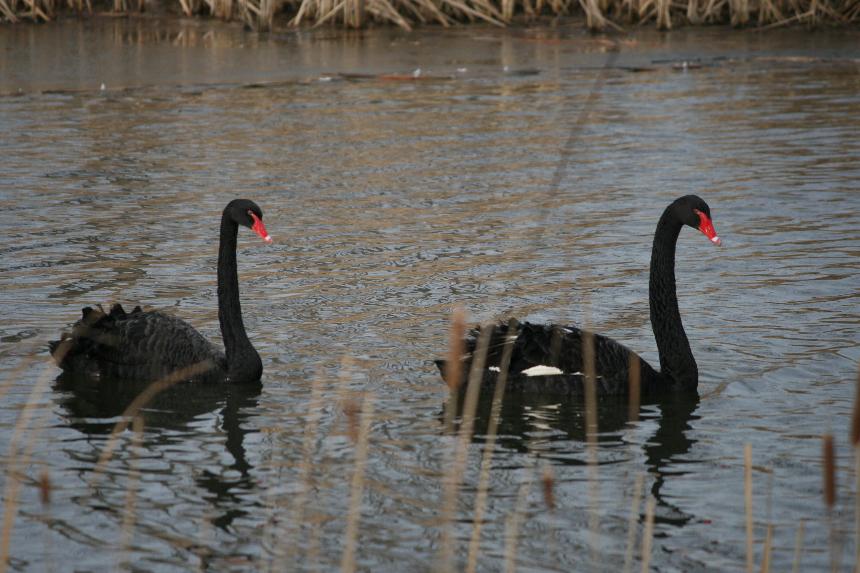
The Black Swan is one of Australia’s most iconic native waterfowl species. When European explorers first encountered Black Swans in the 17th century, they were astonished, as swans were believed to exist only in white. This discovery famously challenged long-held European assumptions about nature.
The Black Swan has the longest neck relative to body size of any swan species, allowing it to feed efficiently in deeper water. Although once hunted to extinction in New Zealand, the species was successfully reintroduced in 1864 and is now well established again.
Appearance
Black Swans have predominantly black plumage, with a striking line of white flight feathers visible when the wings are extended. The beak is bright red with a distinct white bar and tip, while the legs and feet are greyish-black.
-
Male (Cob): Slightly larger, with a straighter beak
-
Female (Pen): Slightly smaller but similar in appearance
-
Cygnets: Fluffy grey-brown down when young
Size
Adult Black Swans typically measure 110–142 cm (43–56 inches) in length.
Diet
Black Swans are primarily herbivorous and feed on:
-
Aquatic plants
-
Sedges and pondweed
-
Grasses when grazing on land
Their long necks allow them to reach submerged vegetation with ease.
Habitat & Range (Australia)
Black Swans inhabit a wide range of wetlands, lakes, rivers, and estuaries. They breed mainly in:
-
South-Western Australia
-
Eastern Australia
-
Tasmania
They are also present in New Zealand following reintroduction efforts.
Breeding
Breeding season generally runs from February to September, depending on water availability and environmental conditions.
Eggs
A typical clutch contains 4–8 eggs, which are pale green in colour.